
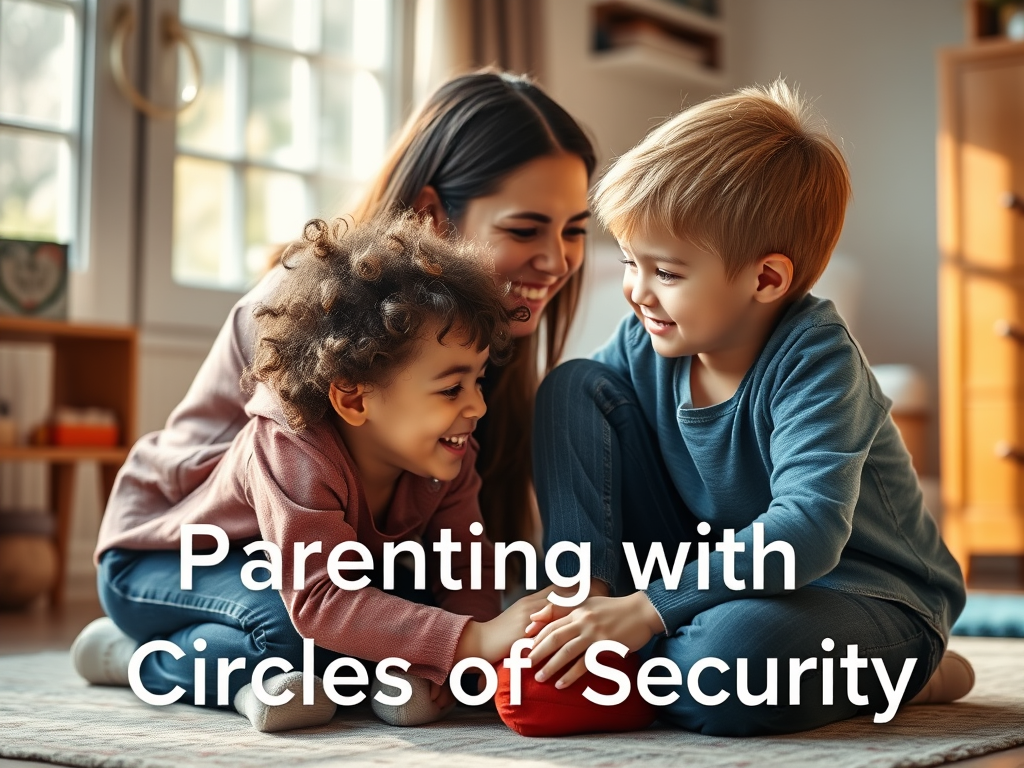
Redefining Parenting with Emotional Safety at the Core
In a world that often pressures parents to be perfect, the Circles of Security (CoS) approach offers a breath of fresh air. Rooted in decades of attachment theory and developmental psychology, it doesn’t ask for perfection—it asks for presence. By focusing on the emotional needs behind behavior, CoS helps parents create a secure base from which their children can explore the world and safely return for comfort and connection.
Parenting with Circles of Security isn’t about flashy techniques or complicated rules—it’s about tuning in, staying close, and making small shifts that lead to a big impact.
What is the Circle of Security?
Origins and Psychological Foundations
Developed by Glen Cooper, Kent Hoffman, and Bert Powell, Circles of Security is an early intervention program grounded in attachment theory. It draws from the work of John Bowlby and Mary Ainsworth, who emphasized that secure attachments in childhood form the bedrock of emotional health.
Core Concepts: Being ‘Bigger, Stronger, Wiser, and Kind’
At the heart of CoS is the role of the caregiver as someone who is bigger, stronger, wiser, and kind—a steady emotional anchor who can support a child’s needs for both independence and comfort. This mantra captures the balance between setting boundaries and offering unconditional love.
How Circles of Security Transforms Parent-Child Relationships
Encouraging Secure Attachment
Children thrive when they know they can count on a caregiver to respond consistently and lovingly. CoS encourages caregivers to “follow the child’s need”, whether it’s for exploration or closeness, which helps build a solid foundation of trust and safety.
Building Trust through Consistent Emotional Responses
Rather than reacting to behavior alone, CoS helps parents respond to what’s underneath—the emotional drivers. Over time, this approach reduces anxiety, acting out, and withdrawal in children.
The Circle Explained: Going Out and Coming In
Supporting Exploration
The “going out” part of the Circle represents a child’s desire to explore, play, and learn. A securely attached child will venture out when they feel confident their caregiver is watching over them and delighting in their experiences.
Welcoming Children Back for Comfort
When children become overwhelmed or tired, they return to the caregiver for comfort. This “coming in” is just as vital—how a parent welcomes them back, especially in times of distress, teaches kids about emotional regulation and relational safety.
The Parent’s Role in the Circle
Reading Cues and Meeting Needs
Children often express needs through behavior, not words. CoS teaches parents to watch, wonder, and respond—not judge. Is your child acting out because they need space or closeness?
Being Present without Overstepping
Being present doesn’t mean hovering. It means being emotionally available, ready to step in or step back depending on your child’s signals.
Common Parenting Challenges and How CoS Helps
Tantrums and Emotional Meltdowns
Children often struggle to express intense emotions in words, which can lead to tantrums. Instead of viewing these as bad behavior, CoS encourages parents to see them as a child’s cry for connection or understanding. By staying calm and present, a parent helps their child feel safe enough to return to balance. This doesn’t mean ignoring boundaries—it means holding them with kindness.
Clinginess and Overdependence
Some parents worry when their child becomes clingy, interpreting it as a lack of independence. CoS reframes this as a natural need for reassurance before venturing out again. When parents meet this need consistently, children actually become more independent over time because their emotional foundation is secure.
Practical Ways to Apply Circles of Security Every Day
Use of Simple Language to Reflect Feelings
One small but powerful tool is helping your child name their emotions. Say things like, “It looks like you’re feeling really frustrated right now,” or “That was a big feeling.” This helps build your child’s emotional vocabulary and fosters emotional intelligence.
Setting Boundaries with Empathy
Boundaries are not the opposite of kindness—they are an essential part of secure parenting. CoS encourages caregivers to set limits calmly, while also validating the child’s feelings. For example: “I see you’re upset that we have to leave the park. It’s hard to stop playing, but now it’s time to go.”
Small Shifts, Long-Term Rewards: What the Research Shows
Positive Outcomes in Child Behavior and Development
Studies show that children with secure attachments are:
- More socially competent
- Better at managing stress
- More likely to develop empathy
- Less prone to behavioral issues
By creating a secure base at home, you’re giving your child tools they’ll use for life.
Parental Confidence and Reduced Stress
Parents who implement CoS principles often report feeling more confident and less reactive. Instead of being caught in a cycle of yelling and guilt, they begin to understand the “why” behind their child’s actions, which naturally leads to more compassionate and effective parenting.
Why Perfection Isn’t the Goal in Secure Parenting
Embracing ‘Good Enough’ Parenting
Donald Winnicott, a famous pediatrician and psychoanalyst, coined the term “good enough mother”—and it still rings true. CoS reinforces that you don’t need to get it right all the time, just often enough. Children need connection, not perfection.
Repairing Ruptures in Connection
When things go wrong (and they will), CoS teaches the value of repairing relationships. A simple, heartfelt apology can go a long way: “I was really frustrated earlier, and I yelled. I’m sorry. You didn’t deserve that. I love you.”
How Circles of Security Builds Resilience in Children
Emotional Regulation and Problem-Solving Skills
Secure attachment gives children a safe space to learn how to manage their emotions, bounce back from setbacks, and tolerate distress. These are the building blocks of resilience.
Healthy Relationships in Later Life
Children who experience secure attachment are more likely to form healthy, trusting relationships in adulthood. They understand how to give and receive love, communicate openly, and manage conflict constructively.
Adapting CoS Principles for Teens and Older Children
While originally developed for younger children, the principles of CoS can evolve as your child grows. Teens also need a secure base—they just express it differently. By maintaining open lines of communication, respecting their autonomy, and offering support when needed, parents can continue to serve as a trusted anchor through adolescence and beyond.
Conclusion: Leading with Love, Patience, and Presence
Parenting doesn’t require perfection—it requires connection. Circles of Security empowers parents to build emotional safety, one interaction at a time. Through consistent, compassionate caregiving, even the smallest shifts in response can lead to a lifetime of secure, resilient children. And that, truly, is a big impact.
If you are curious about the CoS program, read more here.
Leave a Reply